
Research
Child and Young Adult Mental Health
Child and Young Adult Mental Health

Through a partnership between CISM and the SNF Global Center at the Child Mind Institute, which operates in Brazil through Juntô: the Brazilian Initiative for Child and Adolescent Mental Health, the research area "Mental Health of Children and Young Adults" was conceived as an integrated response to some of the major challenges facing child and adolescent mental health in Brazil. The initiative is dedicated to advancing data science, neuroscience, population-based epidemiology, and mental healthcare for children and adolescents.
Estudo Epidemiológico
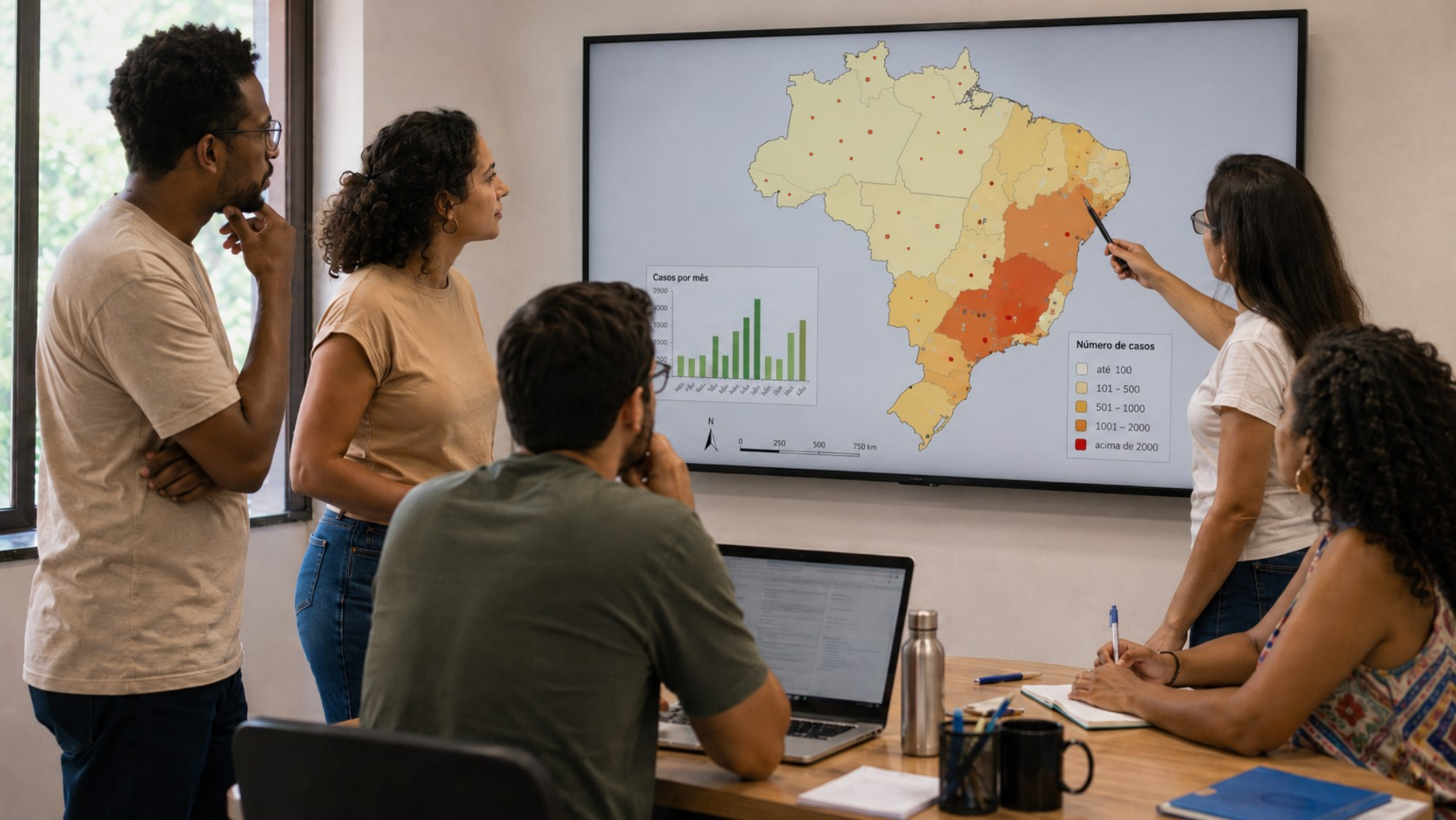
This will be the first national epidemiological study on the mental health of Brazilian children and young adults aged 3 to 24 years conducted using a representative probabilistic sample. A total of 8,160 individuals will be included, and 10,200 interviews will be conducted, including interviews with young participants and their caregivers.
The sample will represent Brazil's five macro-regions, including urban and rural areas and different relevant sociodemographic strata. The study will also place special emphasis on historically underrepresented populations, such as Indigenous peoples, Quilombola communities, rural populations, and groups experiencing high social vulnerability.
These data will enable the generation of unprecedented national and regional prevalence estimates of mental disorders among young people in Brazil, including neurodevelopmental, internalizing, externalizing, and substance use-related disorders. In addition, the study will identify risk and protective factors, barriers to accessing care, and patterns of mental health service utilization.
The findings will be presented through technical reports, scientific publications, and interactive dashboards designed for researchers, policymakers, public health managers, civil society organizations, and other stakeholders. By providing robust national data on the prevalence of mental disorders, the study will address one of the most critical data gaps in Brazilian mental health, supporting the development of new interventions and public health policies.
Fenotipagem - MoBiLAB
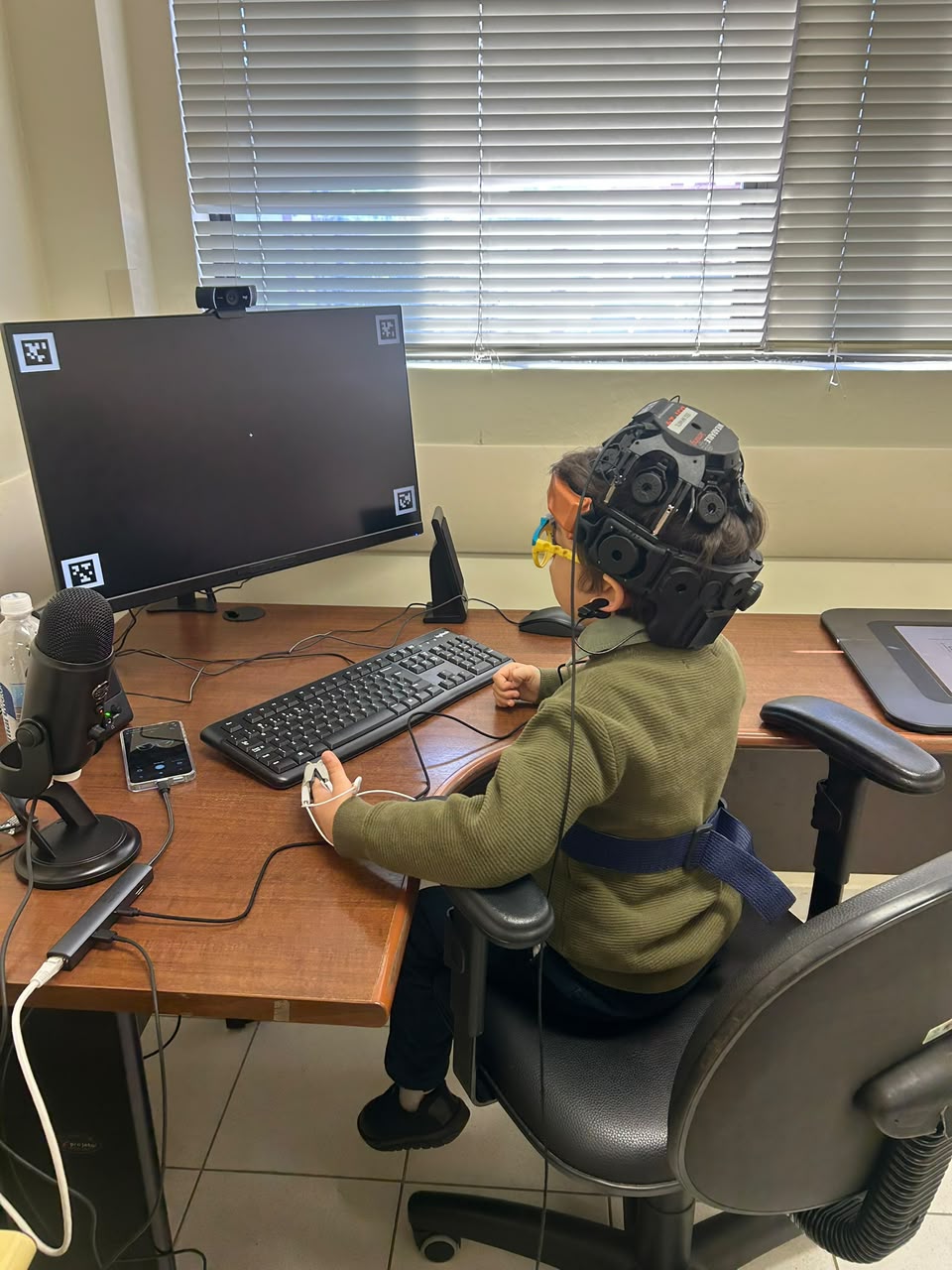
To expand the infrastructure of the Brazilian High-Risk Cohort for Mental Health Conditions (BHRC), the MoBiLAB will be implemented - a multimodal phenotyping platform developed by the Child Mind Institute (CMI). This technology enables the high-precision temporal synchronization of brain, physiological, behavioral, cognitive, and environmental signals.
The MoBiLAB assessment will be conducted with 300 BHRC participants, including 150 parent–child dyads. Researchers will collect data through electroencephalography (EEG), eye tracking, electrocardiography (ECG), skin conductance, respiration, facial expression analysis, body movement, speech, cognitive tasks, and graphomotor behavior assessments. Integrating these signals with existing cohort data will enable the investigation of transdiagnostic risk profiles, digital and neurobiological markers, symptom trajectories, and potential predictors of response to future interventions.
In addition, 1,500 BHRC participants will undergo real-world phenotyping through actigraphy and Ecological Momentary Assessment (EMA). This monitoring will provide information on sleep, physical activity, mood, stress, social context, mobility patterns, and other aspects of daily life.
By combining multimodal laboratory-based assessments with real-world data, this approach will help bridge the gap between scientific evaluation and everyday functioning, increasing the ecological validity of models of mental health risk and resilience.
Protocolos de Tratamento

This initiative aims to expand access to evidence-based mental health interventions for children and adolescents through the implementation of scientifically supported clinical protocols within the public healthcare network of the State of São Paulo.
In partnership with the São Paulo State Department of Health, the project will adapt, implement, and evaluate evidence-based interventions in Primary Health Care and other levels of the mental healthcare system. Identifying context-specific barriers and facilitators will enable the adaptation of interventions to the needs and operational realities of different settings, including primary care units, community health centers, and specialized mental health services.
Professional training will be based on scientific evidence and culturally adapted approaches tailored to the Brazilian population. The project will also use digital tools and real-time clinical data to monitor implementation quality, clinical outcomes, and indicators such as reach, fidelity, and cost-effectiveness.
The expected outcomes include improving mental healthcare for thousands of young people, strengthening the capacity of public health services, and developing a scalable model for training, supervision, and implementation that can be expanded to other municipalities and states across Brazil. The knowledge generated through this initiative will support the development of implementation guides and manuals, contributing to the sustainable dissemination of evidence-based practices throughout the country.
Centro de Excelência em Ciência de Dados e Implementação

Based at the Universidade de São Paulo (USP), the Center of Excellence in Data Science and Implementation in Mental Health will be connected to partners in Brazil, Mozambique, and the Child Mind Institute (CMI) in New York, United States. The Center will be responsible for training researchers, developing computational infrastructure, creating reproducible analytical pipelines, supporting complex analyses, and integrating data generated across the project's other objectives. Its activities will include training programs in programming, advanced statistics, machine learning, implementation science, multimodal data analysis, and ethical data governance.
The Center of Excellence will play a critical role in developing a new generation of mental health researchers in the Global South. Brazilian and Mozambican students will have opportunities for academic exchanges, internships at Brazilian public universities and at the Child Mind Institute, participation in collaborative research projects, advanced training courses, and contributions to international scientific publications. The initiative prioritizes the training of researchers capable of working with complex datasets and translating analytical findings into practical actions for public policies, healthcare services, and evidence-based interventions.